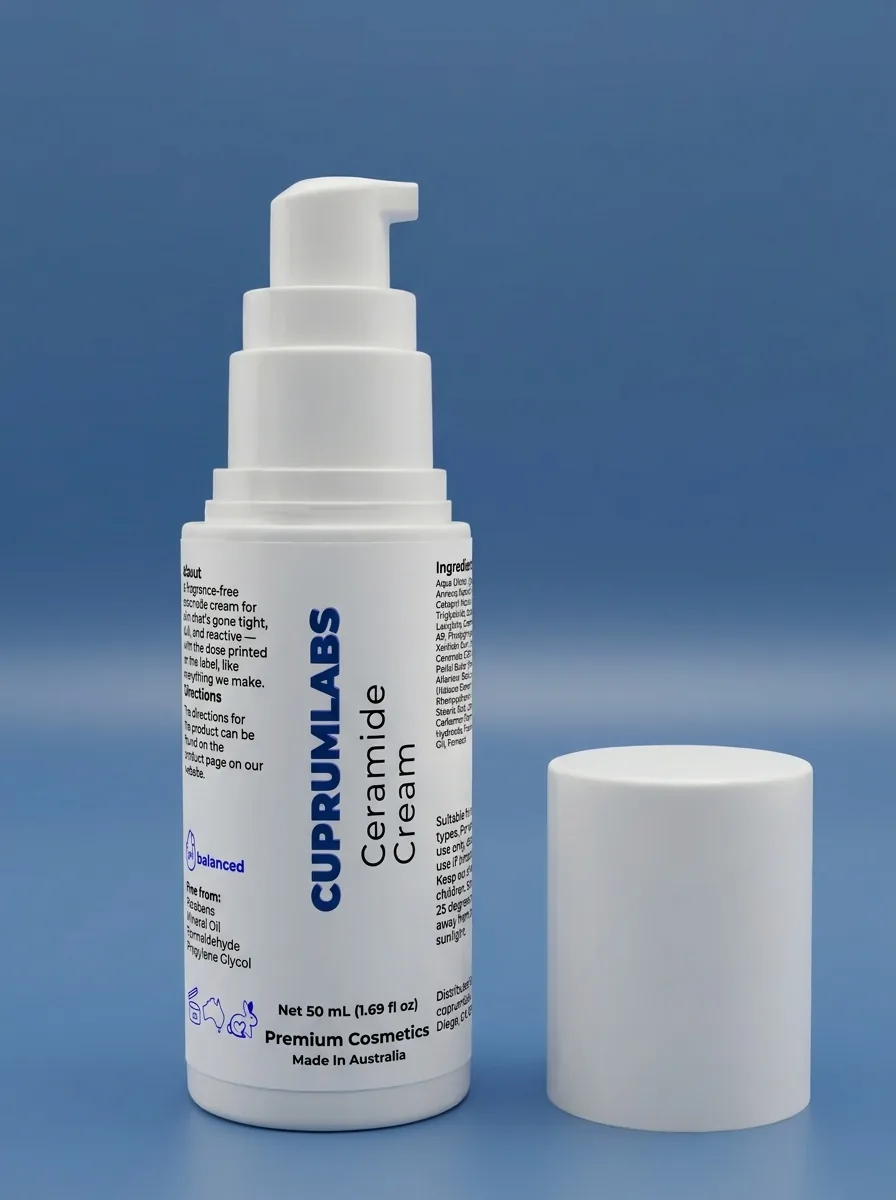
 PHOTO 1
Product photo
PHOTO 1
Product photo
Ceramide Cream · 50 mL
Most ceramide creams just say “ceramides.” Ours names all three.
The lipids that hold your skin together thin out as estrogen falls. This puts back the three your skin makes least of — and tells you exactly which ones they are.
- Ceramide NP, AP and EOP — named individually, not hidden behind “ceramide complex”
- With phytosphingosine and cholesterol, the lipids ceramides work alongside
- Skin that holds moisture and looks calmer in 2–4 weeks
Plenty of creams list “ceramides” once and leave it there. Which ceramides, and what else is in the lipid blend, is the part that tells you whether it was formulated or just labelled.
90-day money-back guarantee · Free US shipping · Cancel anytime
If you choose Subscribe & save: your card is charged $27.99 every 30 days and it continues until you cancel. We email you 3 days before each charge. Cancel yourself in one click at your billing page — enter your email, hit cancel, and it takes effect immediately without waiting on us. To pause or skip an order instead, reply to any email from us. Cancelling never takes more steps than signing up did. Full subscription terms.
- Visa
- Mastercard
- Amex
- PayPal
- Apple Pay
What's actually in the bottle
What's actually in the bottle
- Ceramides
- NP, AP and EOP
- Lipid partners
- Phytosphingosine, cholesterol
- Concentration
- Not disclosed by the manufacturer — so we don't print one
- Size
- 50 mL (1.69 fl oz)
- Fragrance
- Sandalwood wood oil and farnesol — yes, there is fragrance in it
- Made in
- Australia
Free from parabens, mineral oil, formaldehyde and propylene glycol.
We would rather tell you what we don't know than round it off. The manufacturer hasn't released a ceramide percentage for this formula, so there isn't one on the label — and there won't be until there's a document behind it. Everything above is straight off the ingredient list.
Full ingredient list
Aqua, Glycerin, Sunflower Oil, Cetearyl Alcohol, Caprylic/Capric Triglyceride, Sodium Lauroyl Lactylate, Ceramide NP, Ceramide AP, Phytosphingosine, Cholesterol, Xanthan Gum, Ethylhexylglycerin, Ceramide EOP, Butyrospermum Parkii (Shea) Butter, Allantoin, Beta Glucan, Tocopherol, Phenoxyethanol, Ceteareth-20, Stearic Acid, Caprylyl Glycol, Carbomer, Dimethicone, Sodium Hydroxide, Fusanus Spicatus Wood Oil, Farnesol.
 BANNER
Calm skin · natural light
BANNER
Calm skin · natural light
The science, honestly
Real research. Realistic promises.
Published research on skin ceramides
-
Stratum corneum lipids: the effect of ageing and the seasons
-
Ceramides and skin function
-
The structure, function, and importance of ceramides in skin and their use as therapeutic agents in skin-care products
Questions, answered honestly
-
Because we don't have it yet. Our manufacturer hasn't released a figure for this formula, and we're not going to estimate one and print it next to the word “actual” — that's the exact thing this brand exists to complain about. What we can tell you is which ceramides are in it and what they're formulated with, and that's on the label and on this page. When we get a number we can document, it goes on the bottle.
-
Yes — that's what it's for. Serum first on damp skin, cream over the top once it's absorbed. Ceramides don't compete with copper peptides the way vitamin C and strong acids do, so nothing has to be split across different times of day.
-
Yes. It contains sandalwood (Fusanus Spicatus) wood oil and farnesol, both of which are fragrance materials, and farnesol is one of the fragrance allergens the EU requires to be declared by name. If you react to fragrance, this is the sentence you needed and we'd rather you read it here than find it on the box. Patch test on your inner forearm for a couple of days before you put it on your face.
-
Barrier changes show up faster than firmness does. Most people notice skin holding moisture and feeling less tight within two to four weeks of using it twice a day. Texture keeps improving after that. It's a quicker win than the serum, which is still building at week six.
-
It's a cream, not a balm — it goes on white and finishes matte rather than slick, and it sits fine under makeup. If you've been using something that feels like it's sitting on top of your skin rather than going into it, that's usually a sign the barrier is short on lipids, not that the cream is too light.
-
50 mL used morning and night on the face and neck is roughly a month for most people. That's why the subscription is priced the way it is — it's the cadence the product actually runs at.
-
Everything. Use it daily for up to three months. If you don't love what you see, email us and you get a full refund.
How to use it
-
01
Cleanse
Start with clean, slightly damp skin — damp matters more here than people think.
-
02
Serum first, if you use one
Let the GHK-Cu serum absorb before the cream goes on. Thin to thick, always.
-
03
One pump, morning and night
Face and neck. In the morning, sunscreen goes on last — it's the other half of the routine.
Patch test on your inner forearm for a couple of days first, especially if you react to fragrance.
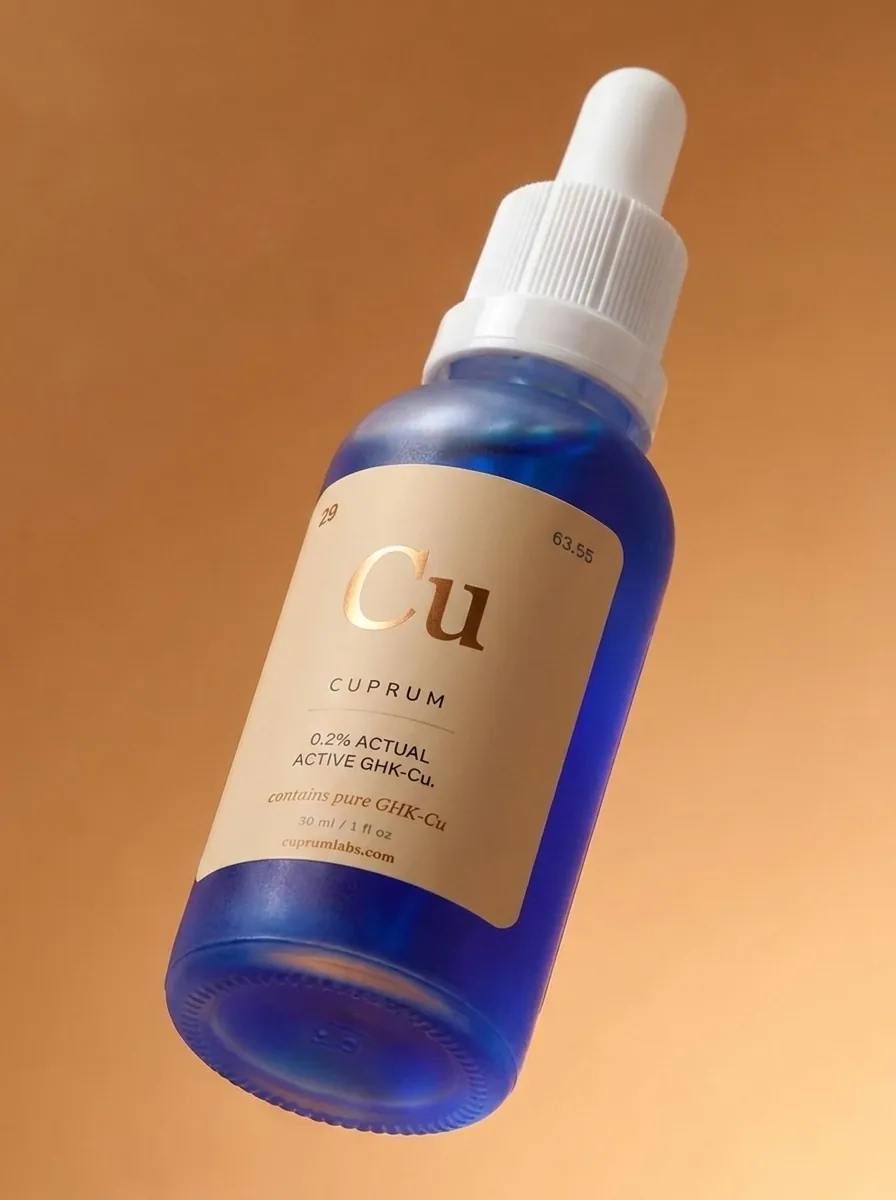 The other half: 0.2% GHK-Cu
Ceramides give the barrier its building material back. The copper peptide serum is the active step that works underneath it. Two products, two minutes, and the same rule on both labels — you get told what's in them.
See the serum →No risk
90-day money-back guarantee — long enough to actually judge it.
Use it daily for three full months. If your skin doesn't love it, one email brings a full refund.
Shop the cream — from $27.99